
The Future of AI Coding Tools
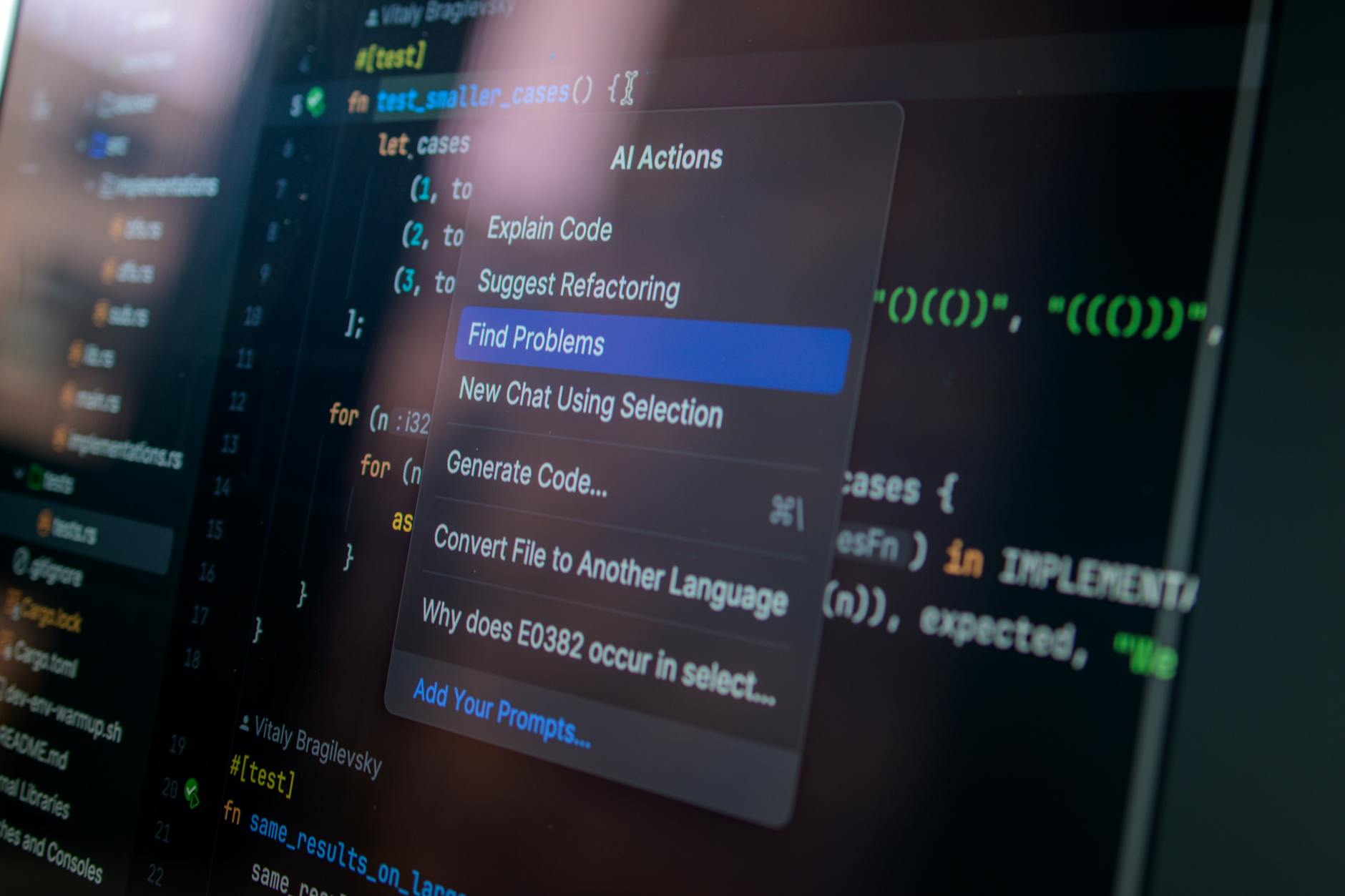
The relationship between human software engineers and their integrated development environments (IDEs) has fundamentally inverted. For decades, the developer was the principal actor, manually defining logic loops, wrestling with compiler syntax, and navigating sprawling directory structures while the IDE acted as a passive syntax highlighter.
By 2026, the IDE is no longer a passive vessel. It has evolved into an active, cognitive orchestrator powered by dense swarms of specialized AI agents. As we project the trajectory of AI for Coding and Developer Tools, the future of software engineering is unequivocally shifting away from imperative syntax writing toward declarative architectural design.
The Transition to Declarative Engineering
The most profound evolution in coding tools is the transition of the developer's focus. Historically, writing software required immense mental bandwidth dedicated to how a specific task should be executed.
Today, utilizing Advanced Reasoning Models directly integrated into the workspace (such as advanced iterations of Cursor or Copilot Workspace), the developer focuses almost exclusively on what needs to be built.
If an engineer needs to implement rate-limiting on a Node.js Express server using Redis, they do not manually write the middleware function, configure the Redis client, and write the Jest unit tests. They write a highly detailed, declarative prompt defining the business logic constraints (e.g., "Implement a sliding-window rate limiter allowing 100 requests per IP per hour, relying on our existing Redis cluster configuration").
The AI reasoning engine:
- Analyzes the entire repository to understand the current middleware stack.
- Writes the exact TypeScript implementation.
- Automatically generates the accompanying unit tests.
- Presents a finalized patch for human validation.
This shift vastly increases developer throughput. A senior engineer managing an agentic swarm acts more like an Engineering Manager, directing high-level architecture and rigorously reviewing PRs generated by the AI network.
The Model Context Protocol (MCP) in Local Execution
The primary constraint on historical AI coding tools was their lack of true environmental awareness. An LLM hosted on a remote cloud server is inherently blind; it cannot build your project to check for syntax errors, it cannot read your local database schema, and it cannot curl an internal API endpoint to verify a response format.
The Model Context Protocol (MCP) provides the crucial architectural bridge that unleashes true autonomy.
By establishing a secure, standardized MCP server on the developer’s local machine, the remote AI gains structured, highly audited access to the real-time development environment.
- When generating a database migration, the AI uses an MCP tool to securely query the local Postgres instance, verifying the table state before writing the
ALTER TABLEcommands. - When executing Full-Stack Application Generation, the AI uses an MCP tool to trigger
npm run build, ingests the terminal standard output, and autonomously corrects any compilation errors before finalizing the task.
This ensures that the AI's output is not merely theoretically correct text, but practically functional code embedded securely within the reality of the local development environment—a necessity explored deeply in Building Reliable Developer Environments for Agents.
The Automation of Technical Debt and Refactoring
Perhaps the highest-ROI application of the future AI tooling stack is the systematic eradication of technical debt.
Enterprise ecosystems are invariably burdened with millions of lines of legacy code—untyped JavaScript from 2016, opaque Perl scripts, or monolithic, tightly coupled architectures. Refactoring this code manually is a massive capital drain that halts feature velocity.
Modern AI coding tools deploy specialized "Refactoring Swarms." A developer highlights a deeply nested, 2,000-line legacy monolith function and provides the declarative prompt: "Decompose this into five isolated, pure microservices following solid principles, add strict TypeScript interfaces, and generate 100% test coverage."
The reasoning engine executes the refactor across the entire project structure instantly, a process that would require weeks of human labor. This capability, detailed in Refactoring Legacy Code with Advanced AI, allows engineering organizations to maintain near-perfect architectural hygiene without sacrificing their product roadmaps.
Conclusion: The Ultimate Cognitive Lever
The future of AI coding tools does not herald the end of the software engineer. Rather, it represents the ultimate cognitive lever. By abstracting the brutal friction of syntax generation, dynamic environment configuration, and repetitive test authoring, these tools force engineers to elevate their skillset. The future belongs to the system architects—the problem solvers who possess the deep structural understanding required to orchestrate vast systems, securely bounding them with protocols like MCP, and guiding autonomous swarms to build the infrastructure of tomorrow.
Written by MCP Registry team
The official blog of the Public MCP Registry, featuring insights on AI, Model Context Protocol, and the future of technology.